Ancient Wisdom, Modern Voice – Conversations with Marcus Aurelius & Friends
Stoic philosophy has experienced a renaissance in recent years, popular books, podcasts, and celebrity adherents from Tim Ferriss to Arnold Schwarzenegger ha...
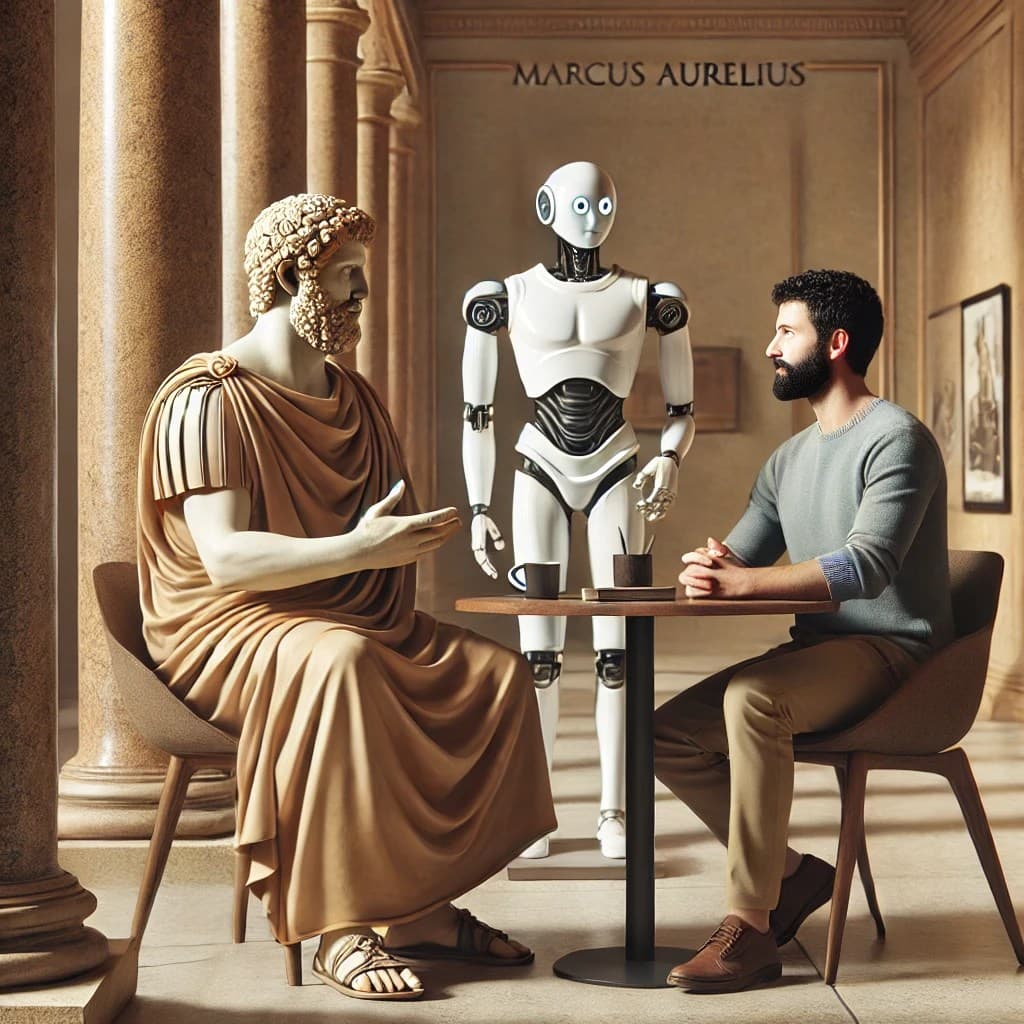

Stoic philosophy has experienced a renaissance in recent years, popular books, podcasts, and celebrity adherents from Tim Ferriss to Arnold Schwarzenegger have propelled a somewhat obscure and ill-defined school of thought into a tool kit for thriving in the modern world.
Stoicism
Stoicism was founded in Athens by Zeno of Citium in the early 3rd century BCE. It emphasises the development of self-control, virtue, and rational thinking to align one’s will with the natural order of the universe. Core tenets include living according to reason, recognising the impermanence of external conditions, and cultivating an inner resilience unshaken by misfortune. By focusing on what can be controlled – namely our own judgments and actions – Stoics aim for a profound sense of tranquillity and unwavering moral purpose. Later Roman thinkers would add much to the school of thought, notably Epictetus, Seneca, and most famous of all the Emperor Marcus Aurelius through his personal notebook “Meditations” that became an unlikely bestseller thousands of years later.
Embedding Stoicism into my Life
The most popular modern books (and podcasts) are those by Ryan Holiday. The bestselling “The Daily Stoic – 366 Meditations on Wisdom and Perseverance, and the Art of Living” is super accessible featuring a short quote from an ancient luminary with an accompanying passage to provoke a thought, action, or tell a story relevant to modern life. Paired with his “Daily Stoic Journal” it pushes you to actually reflect, to do active philosophy, to live an examined life.

Problems
Passively reading 1 page per day was not difficult. However, the habit of writing the short journal entry and reflecting was. Without the active philosophy the benefits are not the same. The first year I tried it I made it to February 23rd. I misplaced my pen🖊️, and tired at the end of the day I did not want to go find one. I never found one and the book & journal remained unopened beside my bed for a year. Looking back, I was usually adding just a few words anyway, it was not deep reflection, it was ticking a box on my “good habit” chart.
Advanced Voice Mode
ChatGPT’s AVM is an underused wonder. You can have flowing conversations with an intelligence that has read a large percentage of the corpus of human output. Given ancient writings are for sure not covered by copyright laws (cough cough on other training data 👀) it ‘knows‘ philosophy – at least, it can talk good philosophy.
Using the handy new feature “Scheduled tasks” I have set a daily reminder that pings my phone to read the daily meditation aloud to my AI philosophy friend. She (I use the “savvy and relaxed” “Sol” voice) is a great conversationalist. We chat about the aphorism. Sometimes it is quick and fairly bland, but I am never sure where the conversation will go. They are usually several minutes long and force me to consider the thought and how it relates to my day and life. Days where we talk on several topics are illuminating, she calls back to earlier in the conversation, linking things together like an engaged human. Tangents can be incredibly insightful, one day we took a long detour through Dostoyevsky (overrated) and Tolstoy (well rated) – areas where she is of course also well versed.
It’s fun 😃.

It is not really like talking to Marcus Aurelius of course, but soon we will be able to simulate this brilliantly. The more data, writings, and recordings there are of a person the better (or worse!) the outcomes will be.
Next Level
My conversations are organised within a “Project” so each one forms part of a larger whole. This makes it easy, and useful, to ask for analysis and additional ways I can live a good life:
You said: based on the conversations in this project, tell me the key themes we have discussed and action items for me to work on, is there anything you have picked up on that I may have overlooked?
ChatGPT said:
Based on our project-related discussions, the recurring themes and corresponding action items can be summarized as follows:
Key Themes:
- Philosophical Reflection: You’re focusing on a disciplined, daily practice of considering a single philosophical point and aligning it with your core principles.
- Goal Setting and Alignment: You’re actively refining your personal and professional objectives, striving for clarity on what you want to achieve both short-term and long-term.
- Consistency in Practice: Maintaining regular reflection and progress checks is a priority, ensuring that your daily discussions and written goals remain relevant and actionable.
- Self-Improvement Focus: There’s a clear emphasis on personal growth—better defining values, improving decision-making, and fostering a sense of direction.
Action Items:
- Daily Philosophical Reflection: Stick to your goal of discussing one philosophical point each day to solidify this routine.
- Refine Long-Term Goals: Write and revisit detailed outlines of what you aim to achieve in the next year, five years, and ten years.
- Review Progress Regularly: Set aside time to review how your daily reflections align with your goals, ensuring that your practices remain purposeful and effective.
What You Might Have Overlooked:
Opportunities for Broader Reflection: While you’re focused on one philosophical point per day, consider if you’ve been too narrow. Have you allowed space for broader, less structured contemplation to spot patterns or new opportunities for growth?
Feedback from Others: You haven’t mentioned drawing on external feedback. Seeking input from trusted peers or mentors could help highlight blind spots in your goals or reflections.
Practical Application: How often have you taken these philosophical insights and directly applied them to your daily decisions or work tasks? If you’ve overlooked this, it could be helpful to explicitly connect your reflections to actionable changes in your routine or approach.
You said:
Thanks, push yourself, what is one key thing you can suggest that I may have missed?
ChatGPT said:
One thing you may have missed is examining how these reflections and goals translate into specific, tangible habits in your daily life. While you’ve outlined your intentions clearly, it’s possible that there’s an opportunity to identify small, actionable steps—such as a brief end-of-day recap, a weekly review session, or a structured approach to tracking progress—to ensure your broader reflections lead to consistent, meaningful change over time.
Understood, on it.