"Fooled by Randomness" by Nassim Nicholas Taleb: Book Review
Have you ever wondered why some traders, firms or people become superstars while others fail, despite similar strategies?
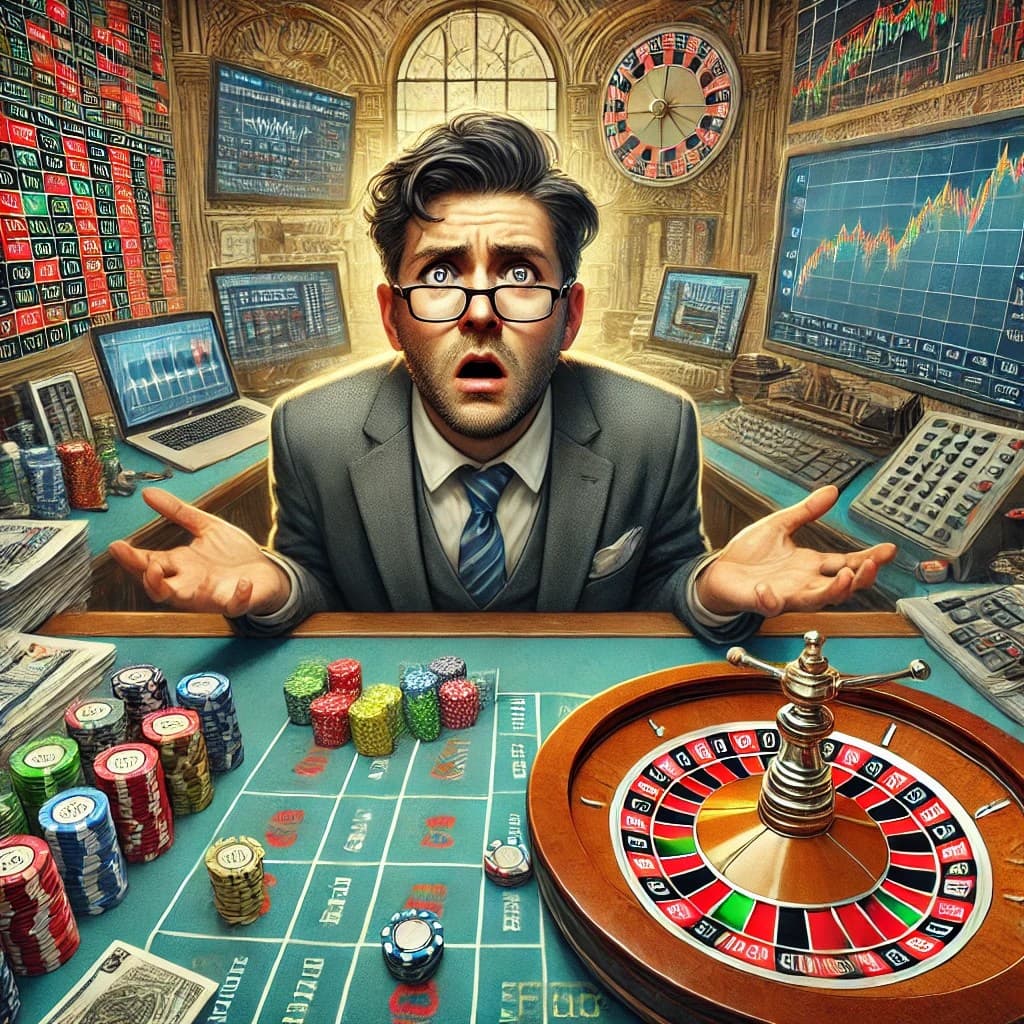
Have you ever wondered why some traders, firms or people become superstars while others fail, despite similar strategies? Nassim Nicholas Taleb’s “Fooled by Randomness” offers a provocative answer: it’s often just ‘luck’. This modern classic challenges our understanding of success and failure in the financial markets and beyond.
Taleb, now a world-famous trader and author who well fits the ‘irreverent iconoclast’ label on the blurb of this book, presents a compelling thesis: randomness plays an outsized role in markets and life, far more than we typically acknowledge.
While many of the ideas aren’t the author’s, he eruditely applies them specifically to trading, weaving in witty and highbrow stories (while showing his disdain for the middle class and ‘middlebrow’ culture). Insights from psychology are particularly prominent – I think Taleb was ahead of his time here.
I’ve read the excellent “Thinking, Fast and Slow” by Daniel Kahneman, who along with Amos Tversky is often mentioned here so it was no surprise for instance to read again the realistic chances of having some ‘superstars’ from a sample of traders even if they made bad calls on average; they got lucky, and we apply a narrative of skill over the randomness behind it. Notably, this does not discount their cleverness or hard work, these are table stakes, but the narrative of skill does not explain the results. Humans are so prone to explanation, reasons, and attribution of skill that we are blind to reality.
This concept has had profound implications for the financial world. The growing recognition of randomness in market outcomes has contributed to the rise in popularity of index funds, which now comprise over half of the market. Investors increasingly trust long-term market averages over more expensive “star” traders, though this trend may carry its own risks.
The book improves as it goes on. In part 2 we walk through some common human heuristics (mental shortcuts) and cognitive biases, often drawing from his own experiences. He candidly admits to falling prey to the same emotional flaws he critiques, demonstrating a self-awareness that adds credibility to his arguments. The central importance of emotion has implications far beyond trading.
In the final part Taleb concludes with intriguing tangents into Stoic philosophy and the benefits of embracing randomness. I enjoyed this part the most.
“don’t complain, the only thing lady Fortuna has no control over is your behaviour”
He poses thought-provoking questions: Would knowing the exact time of your death improve your life? In the same vein, should movie run times be kept secret to enhance the viewing experience?
Taleb’s cultured and abrasive prose, peppered with references to classical literature and philosophy won’t appeal to all readers. Not that this will cause him a second’s distress you understand.
Readers familiar with Kahneman’s “Thinking, Fast and Slow” or other behavioural economics works will recognise many concepts, but their application to financial markets and his personal anecdotes offer a fresh perspective. Unlike Kahneman’s more academic approach, Taleb’s writing is more provocative and opinionated. Though now slightly dated.
“Fooled by Randomness” is a thought-provoking read that challenges our understanding of success, skill, and chance. It’s particularly valuable for those in finance or business, but its insights apply broadly to how we interpret events in our lives. The central message is powerful: “We favour the visible, the embedded, the personal, the narrated, and the tangible; we scorn the abstract.” Recognising this bias is the first step toward a clearer understanding of the world around us.
While the book’s style may not suit everyone, its ideas have only gained relevance since publication. If you’re willing to challenge your assumptions about skill and luck, it’s well worth your time.